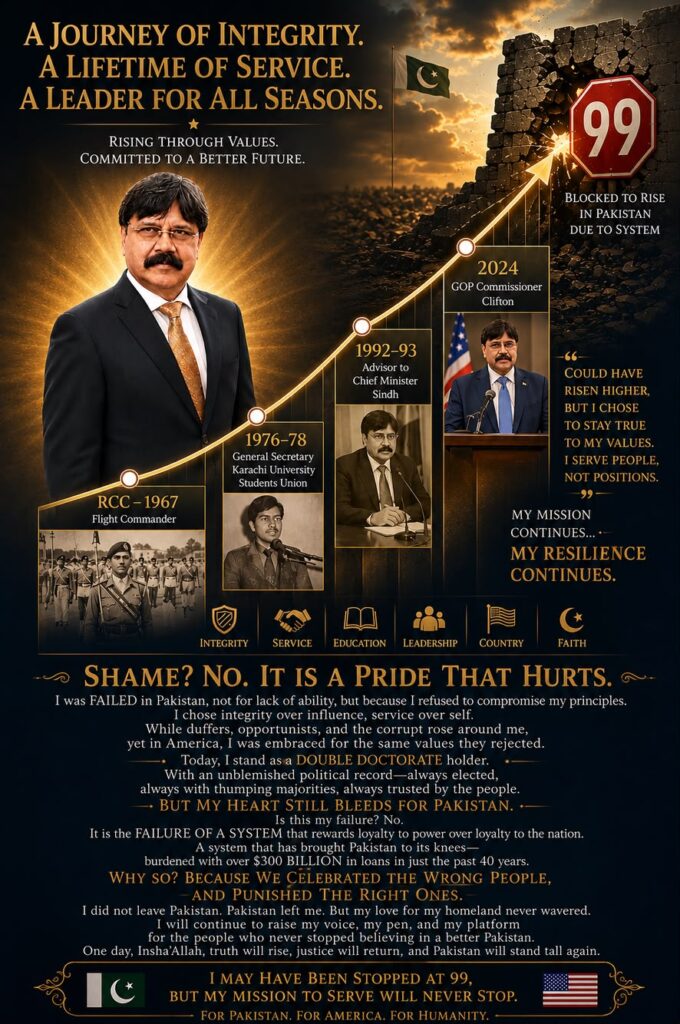
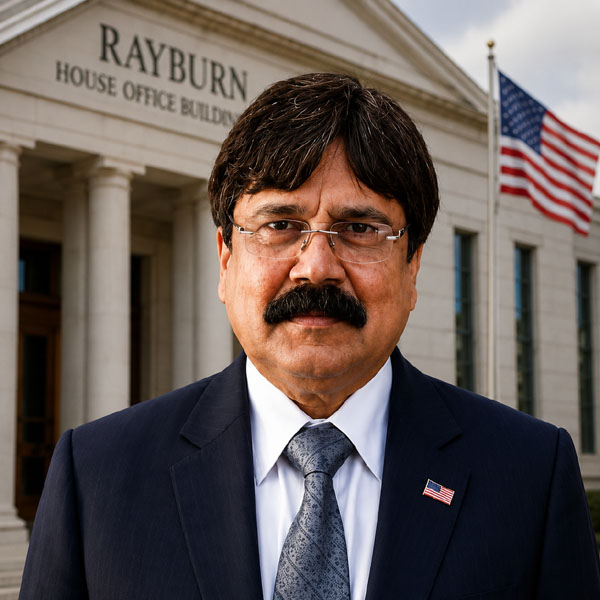
Pakistan Needs Systemic Reform, Not Symbolic Gestures, Says Dr. Gholam Mujtaba
Commentary argues that sustainable investment depends on transparency, merit, and accountability rather than publicity and political influence
NEW YORK : Pakistani-American writer and commentator Dr. Gholam Mujtaba has called for sweeping structural reforms in Pakistan, arguing that the country’s deepening challenges cannot be resolved through short-term publicity campaigns or promises of foreign investment. Instead, he says, Pakistan must overhaul its governance and economic systems to restore investor confidence and achieve long-term prosperity.
In a commentary titled “Pakistan Needs System Change — Not Photo-Ops,” Dr. Mujtaba contends that Pakistan’s difficulties have evolved beyond an economic crisis into what he describes as a systemic failure. According to him, rising public debt, weak revenue generation, limited productive investment, and the continuing loss of skilled professionals are symptoms of deeper institutional problems that require comprehensive reform.
Dr. Mujtaba criticized what he described as decades of unfulfilled promises regarding large-scale foreign investment. He argued that successive announcements of billions of dollars in prospective investment have often failed to translate into tangible economic outcomes, such as new industries, employment opportunities, or increased tax revenues.
He further asserted that genuine investment should be judged by measurable results rather than public relations campaigns. “Investment is measured by capital deployed, enterprises created, jobs generated, and taxes paid—not by photographs, delegations, meetings, or newspaper headlines,” he wrote.
The commentary also raises concerns about members of Pakistan’s political and business elite who, according to Dr. Mujtaba, have transferred wealth and established families abroad while encouraging others to invest in Pakistan. He argues that where there is credible evidence of corruption or the illegal transfer of assets, authorities should pursue accountability through lawful investigations rather than relying on political rhetoric.
Highlighting the country’s growing financial pressures, Dr. Mujtaba maintained that Pakistan cannot achieve economic stability through borrowing alone or by relying on publicity to improve its international image. Instead, he called for institutional reforms that prioritize merit over political connections, productive economic activity over patronage, transparency over privilege, and accountability over influence.
According to Dr. Mujtaba, restoring confidence in Pakistan’s economic future requires creating an environment in which domestic and international investors trust the country’s legal and regulatory framework. He argued that stable institutions, consistent policies, and transparent governance are essential to attracting long-term investment and generating sustainable economic growth.
Concluding his commentary, Dr. Mujtaba summarized his central message by stating that meaningful reform is the key to Pakistan’s future economic success.
“Change the system, and investment will follow. Preserve the system, and debt will follow,” he wrote.
The commentary adds to the ongoing debate among economists, policy experts, and business leaders over the reforms needed to strengthen Pakistan’s economy, improve governance, and restore investor confidence amid continuing fiscal and financial challenges.