

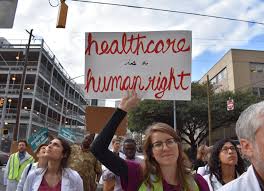
5 healthcare fights Democrats could take on after midterms sweep
Democrats will have leverage to try to restore the expired Obamacare tax credits, reverse Medicaid cuts and push for changes they say would make healthcare more affordable.
By Berkeley Lovelace Jr.
Democrats’ victories in the midterm elections could have a major impact on Americans’ healthcare, from how much people pay for health insurance and prescription drugs to what coverage is available to them, according to health policy experts and former White House advisers. If the Democrats and President Donald Trump are willing to work together, that is.
With control of the House and Senate, Democrats will hold significant leverage to restore the enhanced Affordable Care Act subsidies, reverse cuts to Medicaid and push for changes they say would make healthcare more affordable.
They can also use their oversight powers to scrutinize the Trump administration’s health policies, including those led by Health Secretary Robert F. Kennedy Jr. The new Democratic majority will include three doctors who have been vocal in their criticism of the health secretary, including Sen.-elect Annie Andrews of South Carolina, Sen.-elect Abdul El-Sayed of Michigan, and Rep.-elect Richard Pan of California. During her campaign, Andrews criticized Kennedy for overhauling the federal vaccine schedule and promoting medical disinformation, calling him an “archnemesis” to public health.
“We’ve seen a real transformation of the healthcare state over the last two years and it’s been immensely damaging,” said Miranda Yaver, an assistant professor of health policy and management at the University of Pittsburgh. “We can absolutely expect to see a lot of oversight into these changes and unpacking what those harms are.”
Trump says he will ‘probably’ get along with Democrats after midterms
But turning those policies into law won’t be easy. Any legislation would still need Trump’s signature, setting up a potential clash over the future of healthcare. Ahead of Tuesday’s election, Trump said he’d brand himself “Mr. Veto” if Democrats took control of Congress. On Wednesday, he said he’ll “probably” get along with the Democrats.
“The way I think about this is hunting versus farming,” said John Barkett, a former White House policy adviser under the Biden administration, where he covered drug pricing. “Next Congress, there’s going to be a lot of farming. Hunting, you go for a big kill. If those pass, probably not going to happen [with Trump]. But can you sow seeds and prepare land for growth over time? Yes.”
Here are five ways Democrats could take on healthcare.
ACA subsidies
House Minority Leader Hakeem Jeffries has said restoring the expired enhanced ACA tax credits would be a primary objective for Democrats if they took control of Congress in 2027.
When those federal subsidies expired at the end of last year, millions saw their monthly premium bills double or even triple — forcing about 3 million people to walk away from their coverage altogether. Others switched to cheaper plans that offered worse coverage.
In 2027, costs are expected to rise even more. ACA premiums are jumping by double digits for the second year in a row, and a mix of lower enrollment and rising healthcare costs is driving some major insurers to pull out of the market.
Larry Levitt, executive vice president for health policy at KFF, a nonpartisan health policy research group, said that if Democrats manage to negotiate a deal with Trump to restore the enhanced subsidies, the relief could be backdated to the beginning of 2027. That means anyone who paid the higher premiums would get that money back as a refund.
“That could both increase enrollment and provide cost relief to current ACA enrollees,” he said.
Dr. Ezekiel Emanuel, a special adviser for health policy during the Obama administration, said he supports Democrats pursuing reimplementing ACA subsidies as long as they can find the money for it and they don’t lose sight of rising insurance costs for other Americans.
“One of the dangers of big election victories is people get cocky and they overreach and they fail to deliver on what people actually care about,” he said. “Half of all Americans get their insurance through employer-sponsored insurance.”
Medicaid cuts
The Medicaid cuts under Trump’s “big, beautiful bill,” especially the Medicaid work requirements, are also expected to draw significant pushback from Democrats.
The work requirements are expected to strip coverage from millions of people — not for lack of employment, but due to burdensome paperwork and other red tape. A number of states have already started implementing the requirements ahead of the national Jan. 1 deadline.
Last week, a federal judge in Boston dealt a blow to the administration’s work rules, blocking a policy from the Centers for Medicare & Medicaid Services that would have forced “medically frail” patients and people with disabilities to prove they are too “significantly impaired” to adhere to the new work mandates. The judge also granted states an additional six months to implement the more lenient version.
Levitt said Trump is bound to veto any bills rolling back Medicaid cuts.
“Then the game of chess between Democrats and Trump will begin to figure out what healthcare can actually get enacted,” Levitt said.
It’s also possible a number of states could finally expand Medicaid. Ten states have not adopted the full Medicaid expansion under the ACA. That includes Georgia, Texas and Wisconsin, which elected Democratic governors on Tuesday, alongside Kansas, where the race remains too close to call.
Yaver was skeptical, noting that Trump’s “big, beautiful bill” ended financial incentives that encouraged states to adopt the expansion.
“I think we’re absolutely going to see efforts to increase Medicaid access,” she said. “I just don’t know what Medicaid expansion looks like without the increased financial incentive.”
Affordability and corporate greed
Democrats could find common ground with Trump on efforts to lower healthcare costs, particularly prescription drug prices, Emanuel said.
Trump has made lowering drug costs a priority during his second term, through his discount prescription drug website TrumpRx and his “most favored nation” drug pricing deals. Democrats could push to build on those efforts, while pursuing other changes they say would make drugs more affordable.
“I think there is probably a very big agreement you could reach with him,” Emanuel said.
But Democrats may not find the dealmaker they want in Trump, Barkett said.
“Remember, the big thing Trump has done on drug prices is sign these deals that no one has seen with drug manufacturers, and it’s not even clear the drug manufacturers were hurt by those deals,” Barkett said.
Yaver said another way Democrats could work with Trump is through legislation limiting the use of prior authorization, a cost-cutting tool insurers use that requires patients to get approval before receiving certain treatments. The tool has been blamed by doctors and patients for delaying necessary care. The Trump administration has already made moves to crack down on the practice.
“That is generating not just bipartisan support but unanimous support at the state level,” she said.
There could also be a bipartisan pushback on the rising cost of hospital care as well as pharmacy benefit managers, which act as middlemen to negotiate drug prices and rebates on behalf of insurers and employers. The PBMs have faced criticisms after research has shown their practices can drive up the cost of healthcare.
Investigations into the administration
With control of congressional committees, Democrats will have power to hold hearings, demand documents and subpoena administration officials to testify.
Emanuel said Kennedy is likely to face Democratic probes over his moves on vaccines, including overhauling the CDC’s vaccine advisory panel, changing the federal vaccine schedule and taking steps to alter the federal Vaccine Injury Compensation Program.
The health secretary has also faced widespread criticism and blame for the resurgence of measles in the U.S. This year, there have been more than 4,850 measles cases, the highest number in at least 30 years.
“Some of that does need to happen because that has to stop,” Emanuel said.
Barkett said the investigations might play to the Democrats’ advantage by distracting the Trump administration and potentially freezing any new policies.
“It takes up their time,” he said. “And everything they encounter, whatever they uncover, could be more campaign fodder [for 2028].”
‘Medicare for All’
“Medicare for All” will remain a central goal for many Democrats, even if the proposal is unlikely to become law under a Republican president.
The most popular version of the proposal would establish a government-run health insurance program covering all Americans.
“I’m not a big advocate of ‘Medicare for All,’ but at the moment, the only plan out there is ‘Medicare for All,’” Emanuel said. “We need to have more plans, and we have between now and the start of 2028 to have plans.”
Still, introducing a “Medicare for All” bill and pushing for a vote could give supporters a chance to make their case and build momentum for a broader overhaul of the healthcare system if Democrats win the White House in 2028.
That falls under “the more symbolic category, because as we know, Donald Trump is going to veto big progressive actions,” Yaver said.
THNX NBC News