

Institutional Harmony Key to Economic Diplomacy, Says Dr. Ali Koçak
Expert Calls Ethical Coordination Between Public Institutions and Diaspora Organizations Essential for National Progress
By Manzoor Hussain
In a comprehensive analysis on the future of economic diplomacy and institutional cooperation, Dr. Ali Koçak has emphasized that the true strength of a nation abroad depends not on the number of its institutions, but on the harmony and coordination with which they operate together.
In his article titled “The Ethics of Harmony: Institutional Coordination and the Foundations of Economic Diplomacy,” Dr. Koçak argues that ethical coordination between governments, chambers of commerce, diaspora organizations, academic institutions, and business networks has become a strategic necessity in the modern global economy.
Drawing a powerful comparison with the human body, he explained that societies function effectively only when all institutions communicate and cooperate with one another.
“The most important condition for the success of any society is harmony,” he wrote. “A single weak institution may slow progress, but what truly weakens a country is systemic disharmony.”
Diplomacy Beyond Protocol
Dr. Koçak challenged the traditional understanding of diplomacy as merely ceremonial or protocol-driven, describing modern diplomacy instead as a system of coordination among institutions working toward common national objectives.
According to him, economic diplomacy in the twenty-first century extends beyond embassies and ministries to include chambers of commerce, diaspora organizations, universities, investors, entrepreneurs, and cultural institutions.
“These actors are not decorative,” he noted. “They are essential components of the national body operating abroad.”
He stressed that successful nations empower independent diaspora institutions rather than competing with or undermining them.
Importance of Diaspora Institutions
The article places significant emphasis on the role of diaspora organizations in building long-term international relationships and economic partnerships.
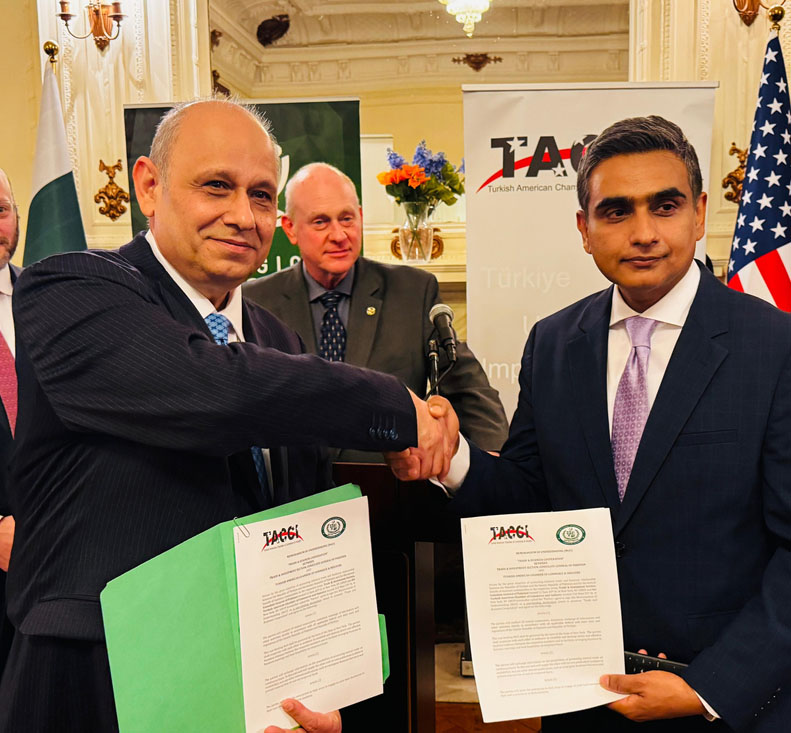
As an example, Dr. Koçak highlighted the work of the Turkish American Chamber of Commerce and Industry (TACCI-USA), which he said has spent nearly two decades building institutional trust through trade forums, academic cooperation, cultural diplomacy initiatives, and international business partnerships.
According to the article, TACCI-USA has established relationships with chambers of commerce, universities, diplomatic missions, entrepreneurs, and civil society organizations across multiple countries, including the United States, Türkiye, Pakistan, Azerbaijan, Korea, Caribbean nations, and Central Asian states.
He noted that such institutions create “institutional capital” through years of consistent engagement and trust-building.
“The value of these relationships cannot be measured solely by agreements signed or events organized,” he stated. “Their true significance lies in the trust accumulated across institutions, communities, and diplomatic circles.”
Warning Against Institutional Rivalry
Dr. Koçak warned that institutional rivalries, favoritism, and the creation of competing parallel structures can significantly weaken national progress.
He argued that when public officials bypass established organizations in favor of less experienced or politically connected groups, it creates confusion, damages trust, and undermines long-term cooperation.
“Public authority carries with it a duty of stewardship,” he wrote. “Relationships developed through years of institutional effort should be strengthened, not fragmented.”
The article also raised concerns about competence and credibility within organizations representing business communities abroad. Dr. Koçak stressed that entrepreneurship and economic leadership require genuine experience, not merely proximity to power or official circles.
“Entrepreneurs deserve guidance from those who have actually built something,” he stated.
International Examples of Successful Coordination
To support his argument, Dr. Koçak cited examples from several countries that have successfully integrated diaspora institutions into their national strategies.
He pointed to Korean-American business organizations, Indian technology networks such as TiE (The Indus Entrepreneurs), and Jewish-American institutions as examples of how long-term coordination between governments and civil organizations can strengthen global influence.
He also praised the efforts of Pakistan’s trade representatives in New York, describing their approach as one based on facilitation, trust, and respect for established diaspora institutions despite limited resources.
“What unites these successful models is neither budget nor geography,” he observed. “It is a shared understanding that public officials and diaspora organizations serve the same long-term national purpose.”
Ethics as Economic Infrastructure
A major theme of the article is the argument that ethics should be treated as part of economic infrastructure rather than as a purely moral concept.
Dr. Koçak maintained that transparent and ethical institutional behavior encourages investor confidence, entrepreneurship, and international cooperation.
“Where ethics is weak, trust becomes expensive,” he wrote. “Every partnership requires suspicion. Every initiative becomes political.”
He further argued that countries cannot effectively mobilize their diaspora communities if independent institutions are viewed as competitors instead of strategic partners.
Six Principles for Reform
The article concludes with a proposed framework for strengthening institutional harmony and economic diplomacy. Among the recommendations are:
- Recognizing independent civil institutions as national assets;
- Promoting cooperation based on merit and proven experience;
- Avoiding conflicts of interest and favoritism;
- Supporting diaspora organizations rather than replacing them;
- Ensuring qualified leadership in business and trade institutions; and
- Treating successful diaspora organizations as strategic extensions of national influence.
Dr. Koçak concluded by stressing that institutional harmony is not merely a matter of politeness, but a fundamental requirement for national progress and global influence.
“The future of economic diplomacy belongs to nations that understand a simple truth,” he wrote. “Institutional harmony is not optional. It is the foundation of trust, the engine of progress, and the invisible architecture upon which successful nations build their influence.”
Global Business Diplomacy Journal
About the Journal
Global Business Diplomacy Journal is a bilingual publication released in Turkish and English by the Turkish American Chamber of Commerce and Industry (TACCI-USA). The journal explores how emerging economies can strategically utilize diaspora networks, institutional reform, and economic diplomacy to shape their global future. Each issue features analysis, policy reviews, and case-based articles written by academics, entrepreneurs, and international leaders operating at the intersection of business and diplomacy. Grounded in the Türkiye–U.S. experience, the journal sheds light on practical strategies for building competitive, innovative, and resilient economies. This article appears as the opening feature in the first issue of our journal.
Dergi Hakkında
Global Business Diplomacy Journal, Türk Amerikan Ticaret ve Sanayi Odası (TACCI-USA) tarafından Türkçe ve İngilizce olarak yayımlanan bir dergidir. Özellikle gelişmekte olan ülkelerin küresel geleceğini şekillendirmek adına diaspora ağlarının, kurumsal reformların ve stratejik diplomasinin nasıl etkin biçimde kullanılabileceğini ele alır. Her sayısında, iş dünyası ile diplomasinin kesişim noktasında yer alan akademisyenlerin, girişimcilerin ve uluslararası liderlerin kaleme aldığı analizler, politika incelemeleri ve vaka temelli yazılara yer verilir. Türkiye–ABD deneyimi ekseninde şekillenen bu yayın, rekabetçi, yenilikçi ve dayanıklı ekonomiler inşa etmeyi amaçlayan stratejilere ışık tutar. Bu makale, dergimizin ilk sayısında yer alan açılış yazısıdır.