
Three petrol shipments expected tomorrow: petroleum minister
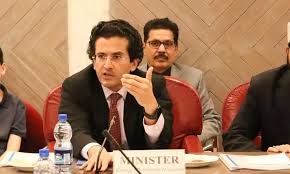
Three petroleum shipments are expected to reach Pakistan by tomorrow, Petroleum Minister Ali Pervaiz Malik informed a briefing called to discuss rising global oil prices and fuel reserves amid the widening Middle East conflict on Sunday.
The meeting attended by Finance Minister Muhammad Aurangzeb and Sindh Chief Minister Murad Ali Shah comes a day after Prime Minister Shehbaz Sharif directed the finance and petroleum ministers to work with provincial governments on a strategy to conserve and ensure uninterrupted supply of petroleum products amid fuel shortage concerns sparked by the Israel-Iran war.
The federal government delegation offered a detailed briefing to the Sindh CM on the recent price hike and fuel reserves, according to a statement issued by CM House.
Finance Minister Aurangzeb told the meeting that Pakistan’s monthly oil import bill could increase to $600 million in the backdrop of the conflict, adding that the government is continuously monitoring global energy markets and preparing alternative plans to deal with the financial impact of rising oil prices. Additionally, crude prices could rise to $120 a barrel if the conflict escalates further.Diplomatic contacts are ongoing with Saudi Arabia, Oman and the United Arab Emirates for alternative fuel supplies, the delegation said, noting that efforts are underway to ensure alternate fuel supply routes other than the Strait of Hormuz. Due to Qatar declaring force majeure, LNG supply disruptions are also anticipated, the petroleum minister added.
Fuel-saving measures are necessary so that existing reserves last longer, Malik asserted. Additionally, he said, Pakistan would request the International Monetary Fund for relief in the petroleum levy.
The federal and provincial governments decided to increase coordination to prevent hoarding at petrol pumps, with Aurangzeb briefing the meeting on a joint dashboard being prepared to monitor fuel reserves.
Emergency conservation measures were discussed, with CM Shah affirming that all proposals discussed in the meeting would be presented to the cabinet for consideration.
Responsible use of energy and public cooperation are necessary, with smooth functioning of the economy the government’s top priority, the CM said.
The federal and provincial governments decided to maintain close coordination to manage the energy situation.Other attendees of the meeting included Additional Secretary Petroleum Division Zafar Abbas, Executive Director Oil and Gas Regulatory Authority Atif Sajjad, Director General (Oil) Petroleum Division Imran Ahmed, Member (Oil) Oil and Gas Regulatory Authority Zainul Abidin, and Managing Director Sui Southern Gas Company Muhammad Amin and Muhammad Idrees.
‘Nation must demonstrate resilience’
Punjab Chief Minister Maryam Nawaz on Sunday also reviewed the supply, demand and reserves of petroleum products in the province while meeting the finance and petroleum ministers, PTV News reported.
An agreement to adopt a conservation policy to maintain balance between demand and supply of of petrol products was reached, with the chief minister emphasising the need to ensure continued diesel supply for agricultural use.
CM Nawaz asserted that no one would be allowed to sell petroleum products above proscribed prices anywhere in Punjab, adding that citizens should not have to stand in long queues at petrol pumps.
She called on the “entire nation to demonstrate resilience” to cope with these challenges.Participants of the meeting agreed to monitor petroleum reserves, with a strict crackdown on hoarding ordered. District administrations across all districts were also ordered to continuously monitor the supply of petroleum products, the report said.
The statement added that the Punjab Enforcement and Regulatory Authority (PERA) and the Transport Department were directed to monitor the situation and take action.
On Friday, the government increased the prices of petrol and high-speed diesel by Rs55 per litre, the highest-ever such hike, as Pakistan felt the first direct economic impact of the US-Israel war on Iran.
The ex-depot price of high-speed diesel was fixed at Rs335.86 per litre for the coming week, up by about 20pc from Rs280.86 per litre. Likewise, the ex-depot price of petrol was revised to Rs321.17 per litre from Rs266.17 per litre, reflecting an increase of around 17pc.
Pakistan relies heavily on the oil supply passing through the Strait of Hormuz. The government made the decision to raise prices due to the disruption in fuel supplies through the strait.Economic burden on public’: TTAP
The opposition alliance Tehreek Tahafuz Ayeen-i-Pakistan (TTAP) on Sunday termed the petroleum price hike as an “economic burden on the public”.
Speaking during a press conference in Islamabad, the TTAP leaders demanded relief for citizens and the restoration of democratic and judicial integrity.
TTAP leader Muhammad Zubair questioned why petrol purchased at around $65 per barrel was being sold to the public at rates equivalent to $90, alleging that the government would amass approximately Rs110 billion through this decision.
He claimed that the Federal Board of Revenue (FBR) was “already facing a Rs600 billion shortfall,” and if the government had managed economic affairs properly, it would have been able to provide relief to the people instead of increasing prices.
“Life has already become extremely difficult for motorcyclists and low-income people. An increase in petrol prices will raise the cost of all goods and services, affecting every sector of the economy. Poor people cannot afford such an increase,” Zubair said.
He said that the salaried class was being “forced” to pay tax. On the other hand, he said the ruling elite continued to impose a burden on the public without making sacrifices themselves.
“Government claims the country is poor, but the lifestyle of the ruling class showed a different story,” he criticised.
He asked why fuel and other perks and privileges of the bureaucracy had not been cut. TTAP leader blamed Donald Trump for global instability and criticised the Pakistani government for nominating him for the Nobel Peace Prize.